
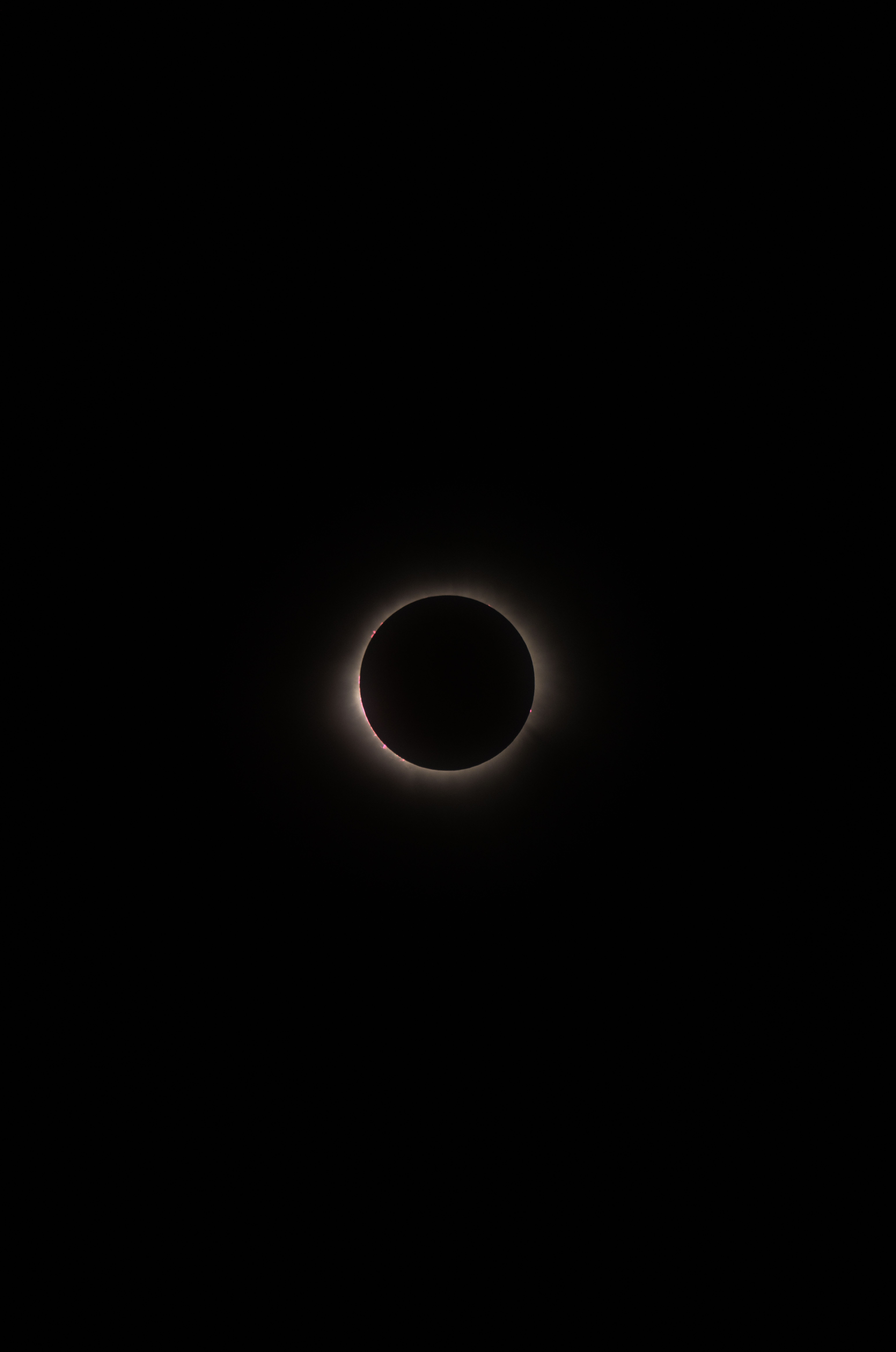
Residents of Bronxville, Scarsdale and Eastchester will be able to watch the moon take a bite out of the sun on Wednesday, Aug. 12, when a partial solar eclipse passes over the Northeast during the early afternoon.
The eclipse will peak at approximately 1:54 p.m. EDT in the Westchester County area, with about 9% of the sun's disk covered by the moon, according to BBC Sky at Night Magazine. The partial eclipse window runs from roughly 1 to 2:50 p.m. EDT. The farther north you go, the more coverage: Burlington, Vermont, will see 17%, and Boston about 16%.
What you'll need
Eclipse glasses or handheld solar viewers that comply with the ISO 12312-2 international safety standard are required for the entire duration, according to NASA. Ordinary sunglasses are not safe. Viewers should never look at the sun through a camera, telescope or binoculars while wearing eclipse glasses; those devices concentrate sunlight and need specially designed solar filters on the front.
If you still have eclipse glasses from the April 8, 2024 total solar eclipse, NASA says they're safe to reuse as long as they aren't torn, scratched or damaged.
No glasses? A pinhole projector works. Poke a small hole in a piece of cardboard and hold it so sunlight passes through, projecting a crescent image onto the ground or a wall. Tree leaves also act as natural pinhole projectors, casting crescent-shaped shadows on sidewalks.
No local library eclipse-glasses distribution programs have been confirmed. Residents can call the Bronxville Public Library at (914) 337-7680 to ask about resources; the library at 201 Pondfield Road is open Wednesday from 9:30 a.m. to 5:30 p.m.
Watch from home
According to AccuWeather, NASA will livestream the eclipse starting at 1:15 p.m. EDT on NASA+, its website and social media platforms, with telescope views from Spain and footage from a high-altitude research aircraft chasing the moon's shadow.
"A total solar eclipse is very much all or nothing," Emily Watson, an astrophysicist and planetarium supervisor at the U.S. Space & Rocket Center, told National Geographic on Aug. 6. "Experiencing totality is a truly unique and awe-inspiring event; experiencing partiality is just neat."
The path of totality for Wednesday's eclipse crosses northern Russia, Greenland, Iceland, Spain and a small corner of Portugal. The next total solar eclipse visible from the contiguous United States won't arrive until Aug. 23, 2044.
Double feature: Perseid meteor shower the same night
The Perseid meteor shower peaks overnight Wednesday, Aug. 12, into Thursday, Aug. 13. The new moon means dark skies and no moonlight washing out the show. Under clear conditions, the Perseids can produce 60 or more meteors per hour after midnight.
Upcoming community calendar
- Wednesday, Aug. 12: Partial solar eclipse, peak ~1:54 p.m. EDT; Perseid meteor shower peaks overnight
- Overnight Aug. 27–28: Partial lunar eclipse (~96% coverage) visible from the Americas; no special glasses needed
- Wednesday, Sept. 9: Deadline for Westchester youth volunteer award nominations