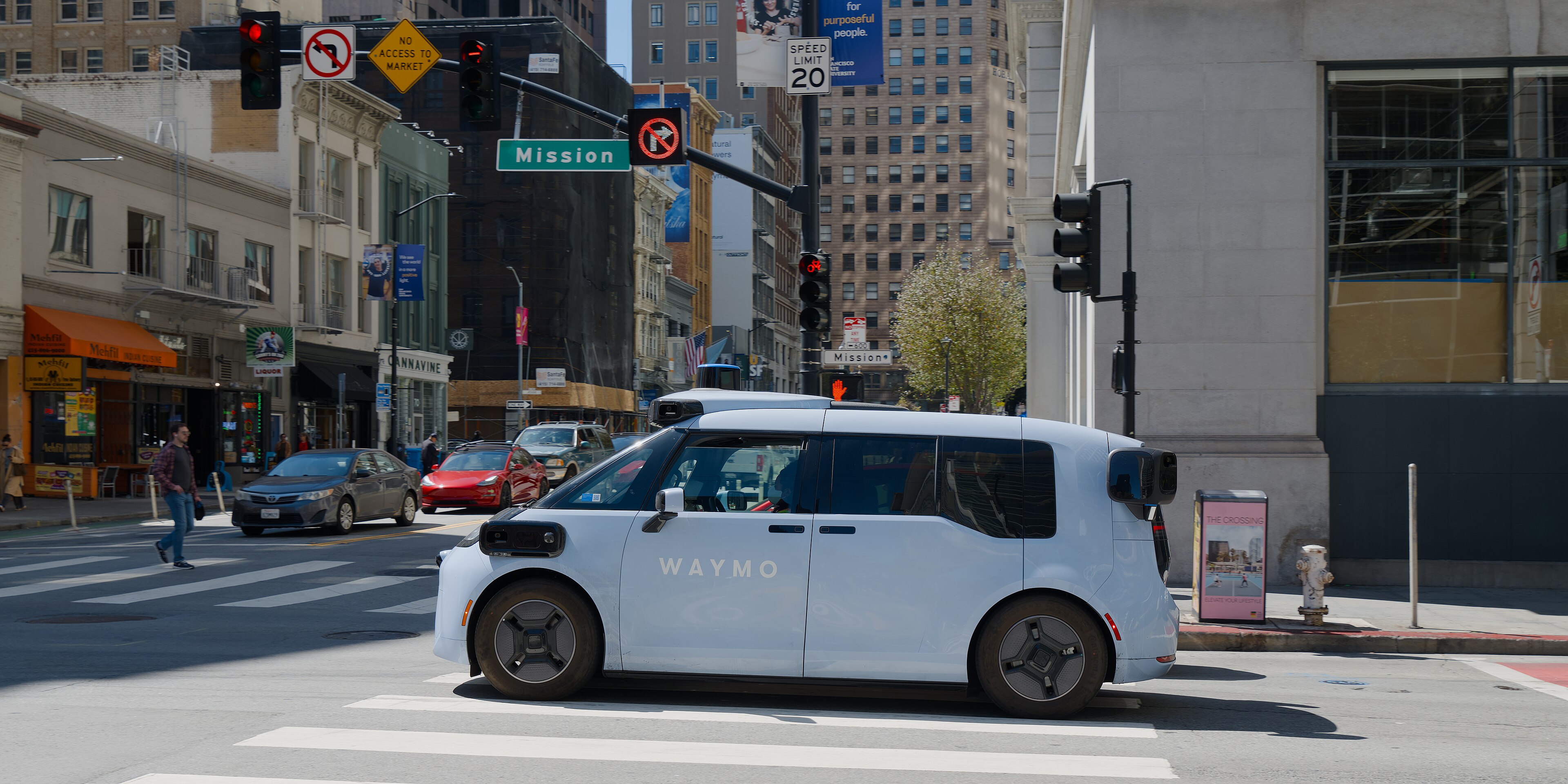
Waymo, the Alphabet-owned self-driving car company, is on pace to import about 5,100 Chinese-built electric vans by the end of 2026, according to tracking data from research firm MoffettNathanson reported by the New York Post.
The vehicles would more than double Waymo's current fleet of roughly 4,000 robotaxis. They arrive despite 127.5% tariffs on Chinese-made electric vehicles that have kept consumer models off American roads.
The vans, which Waymo calls the Ojai, are built in China by Zeekr, an electric vehicle brand owned by Geely Holding Group. Zeekr ships them to the Port of Los Angeles without sensors or computing systems. Waymo then installs its own U.S.-developed self-driving technology at a facility in Mesa, Ariz.
That arrangement lets Waymo sidestep a Commerce Department rule, effective for model year 2027, that bans the import or sale of connected vehicles or self-driving software made in China or Russia. Waymo says the stripped-down vehicles contain no Chinese software or connectivity when they reach American roads.
"The technology that collects data and makes our vehicles autonomous … is developed in the U.S.," Waymo spokeswoman Sandy Karp told Forbes. "Waymo installs the autonomous driving technology on stripped-down, disconnected OEM-provided vehicles in our Arizona manufacturing facility."
Not everyone is reassured.
Missy Cummings, director of George Mason University's Autonomy and Robotics Center and a former senior safety adviser at the National Highway Traffic Safety Administration, told the New York Post she doubts Waymo's assurances that the Zeekr chassis are free of Chinese tech.
"It's very possible that the Chinese have layered in other sensors that are recording data and sending it back to China," Cummings said.
Waymo told the Post that it does not share rider data, vehicle telemetry or autonomous-driving data with Zeekr or any other vehicle manufacturer.
Congress eyes a ban
Sen. Bernie Moreno, R-Ohio, and Sen. Elissa Slotkin, D-Mich., introduced the Connected Vehicle Security Act in April to ban the import of any vehicle manufactured in China, even if an American company adds its own software afterward. The Senate Commerce Committee advanced the bill unanimously in July, according to AZFamily.
An attempt to pass the bill by unanimous consent failed Sept. 30 after Sen. Rand Paul of Kentucky objected that the language could sweep in Mercedes-Benz because of its Chinese shareholders, Startup Fortune reported. The Senate left Washington until after the midterm elections. The Senate version includes transitional provisions for qualifying established U.S. manufacturers and fleet operators, with annual reports outlining plans to comply by 2030. The legislation has not become law.
In the House, China Select Committee Chair John Moolenaar introduced companion legislation.
"We cannot allow its vehicles into our country, or it will use that opportunity to bankrupt U.S. companies, cause massive job losses … and hollow out the foundation of our nation's manufacturing base," Moolenaar said in a statement to the Post.
The cost math
Waymo has not disclosed what it pays Zeekr per vehicle. Analyst estimates for a finished Ojai, including tariffs and Waymo's hardware, range widely. Morgan Stanley estimated about $125,000, according to EV reporting by Eletric-Vehicles.com. Telemetry analyst Sam Abuelsamid estimated $60,000 to $70,000 for the base vehicle, the Chicago Tribune reported.
All estimates put the Ojai well below the roughly $200,000 cost of Waymo's outgoing Jaguar I-Pace robotaxis.
Tu Le, managing director of consultancy Sino Auto Insights, told Forbes that Waymo is likely paying far less than the $39,000 Chinese retail price for each Zeekr chassis.
"Geely could be eating some of that tariff since Waymo's kind of stuck," Le said. "Their AV stack was designed specifically for Ojai prior to all these tariffs."
A Georgia-built alternative is coming
Waymo is also preparing to add Hyundai Ioniq 5 electric hatchbacks assembled at Hyundai's $12.6 billion Metaplant in Ellabell, Ga. Hyundai told investors the first Ioniq 5 robotaxis for Waymo will be delivered in the fourth quarter of 2026, according to Yahoo Finance.
That plant employs 1,623 workers, with plans to reach 2,600 when fully staffed and 8,500 across the broader complex including suppliers, Autoweek reported. Average salaries run about $56,000 a year.
Waymo's Mesa integration plant, a 239,000-square-foot facility operated with Canada's Magna, has created what the company called "hundreds of jobs." At full capacity, Waymo said the plant could build tens of thousands of autonomous vehicles per year.
Semafor reported that Waymo plans to grow its fleet to 20,000 vehicles by the end of 2027, according to Gizmodo, citing unnamed sources. Waymo has not confirmed that target. The company recently secured $5 billion in debt financing and raised $16 billion from investors earlier in 2026.
Whether those vehicles will be built in China or the United States remains an open question on Capitol Hill.